- The Recruiting Life
- Posts
- The Most Important Lesson Layoffs Teach: Your Career Belongs to You—Not Your Employer
The Most Important Lesson Layoffs Teach: Your Career Belongs to You—Not Your Employer
Just in case you didn't already know.

Jim Stroud
December 14, 2025
The Recruiting Life is brought to you in part by:


The Recruiting Life Newsletter
In this issue:
Executives say layoffs are “just business.”
History says something else.
Every layoff wave forces the same realization:
your career never belonged to your employer—it always belonged to you.
Across 40 years, layoffs don’t just cut jobs.
They shift power, change mindsets, and turn workers into owners.
Here’s the truth no one likes to say out loud 👇
…
The HR Blotter
Recruiting Tech Is Where the Money Is Going in 2026 - HR leaders are quietly locking in their bets for 2026, and recruiting platforms are moving to the front of the HR tech budget line. The message is clear: when hiring gets harder and mistakes get costlier, companies spend on systems that help them find, assess, and secure talent faster. Leadership moves mentioned in the article reinforce that recruiting is no longer a support function, it is a strategic lever in the modern workplace.
AI Laws Are Coming for the Workplace Faster Than You Think - Lawmakers are flooding statehouses with AI bills in 2025, covering everything from hiring tools and data use to transparency and worker protections. What looks like policy chatter today will quickly become compliance reality for employers using AI in recruiting, performance management, and workforce monitoring. In the world of work, this signals a narrowing window for companies to get their AI practices in order before regulation starts shaping what tools they can use and how they can use them.
The Office Is Quietly Taking Power Back - Employers around Boston are tightening hybrid and office attendance rules as patience with fully flexible work fades. Leaders are framing the shift as a productivity and culture move, but employees hear it as a power reset after years of leverage. In the world of work, this shows hybrid work settling into a controlled compromise where companies decide the terms and workers choose whether to comply or leave.
Starbucks Labor Fight Is Spreading City by City - Starbucks workers are expanding a month long strike to more cities, signaling that labor tensions inside the company are not cooling off but spreading. What began as localized unrest is turning into a coordinated pressure campaign as workers push for better pay, scheduling, and respect at work. In the world of work, this is another reminder that frontline employees are increasingly willing to disrupt operations when they feel corporate growth is not translating into fair treatment.
When College Leads to Lower Pay, the Government Will Now Say So - The Free Application for Federal Student Aid (FAFSA) is being updated to warn students when colleges produce graduates who earn less than people with only a high school diploma. The change is meant to help families judge whether taking on college debt makes sense as tuition climbs and the job market leaves many graduates underemployed. In the world of work, this signals a growing expectation that education choices should be measured by real earnings and career outcomes, not just prestige or promises.
…
The Jim Stroud Podcast
Not subscribed to The Jim Stroud Podcast? Then you’ve been flying blind. Here’s a taste of what they’ve been hearing—while you’ve been missing it.


…
Webinar: How To Follow The Money Trail to Your Next Job
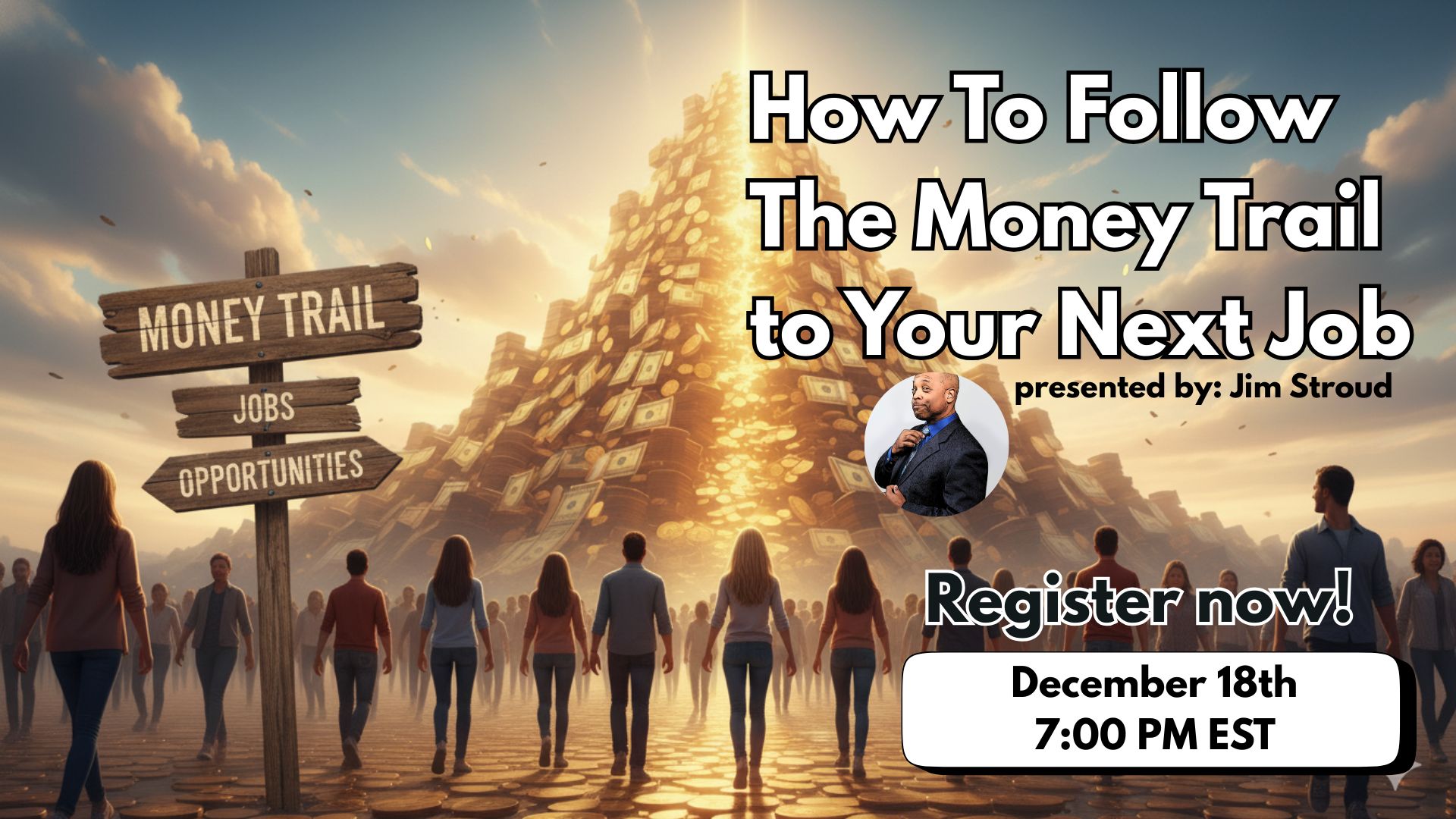
What if the companies hiring right now already announced it—and you just never knew where to look? Most people wait for job postings and show up late. But hiring signals appear months earlier: budget shifts, partnerships, permits, and contract wins.
This webinar shows you how to read those signals and spot roles 6–18 months before they exist. No fluff—just real sources, search strings, and tools to track where companies are about to grow.
If you’re tired of being applicant #347, this gives you the edge. Stop reacting to job posts. Start predicting them.
Webinar: How To Follow The Money Trail to Your Next Job
Date: Thursday, September 18, 2025
Time: 7:00 pm EST Cost: Free
…
The Most Important Lesson Layoffs Teach: Your Career Belongs to You—Not Your Employer

Every time a new wave of layoffs hits the headlines, executives offer the same explanation: “It’s not personal. It’s a business decision.”
What almost nobody says out loud is this:
Layoffs expose a truth most professionals spend their entire careers avoiding.
Your career has never belonged to your employer. It has always belonged to you.
And layoffs—painful as they are—force that reality into the open.
The Pattern No One Wants to Admit
Investigating past layoff cycles reveals something striking:
Layoffs shift career ownership back to the individual—every single time.
Not just today’s wave.
Not just tech.
Not just post-COVID.
Across industries and decades, each layoff surge triggers the same behavioral shift:
Workers stop relying on employers for stability.
They begin prioritizing skills over job titles.
They build networks outside their workplace.
They upskill, reskill, and sometimes reinvent entirely.
They negotiate differently.
They stop assuming loyalty will be reciprocated.
Layoffs don’t just change careers—they change mindsets.
Tracing the Evidence Across 40 Years
1. Early-1990s Corporate Downsizing → Rise of the “Free Agent Worker”
Laid-off white-collar workers discovered the hard way that long-term employment was over.
This is when the freelance revolution actually began.
2. Dot-Com Bust → Skills-Over-Seniority Culture
Young tech workers learned that tenure meant nothing unless skills backed it.
Skill stacking became the new job security.
3. 2008 Crisis → Permanent Shift to “Plan B Careers”
Workers adopted backup plans, side hustles, certifications, second income streams.
The idea of “one job, one employer” started to fade.
4. COVID + Post-2023 Layoffs → Ownership Mindset Becomes Default
Workers now:
build personal brands
maintain portfolios
treat jobs as projects
track their own market value
refuse to be defined by a company logo
Layoffs didn’t just reshape the labor market;
The Data Behind the Shift
Investigating workforce trends shows:
New certifications and skills training spike immediately following layoffs.
Networking activity increases 3–5x in the 60 days post-layoff.
Workers who’ve been laid off once negotiate more aggressively on future offers.
The majority of workers who start businesses cite layoffs as the catalyst.
Layoffs produce a measurable surge in career ownership behaviors.
Why Layoffs Force Ownership (Whether You Want It or Not)
Over time, the same pattens repeat and become obvious:
Employers are temporary. Skills are permanent.
Your network outlasts every job you’ll ever have.
Stability isn’t something companies give—it’s something workers build.
Brand matters. Your personal brand more than your employer’s.
Career resilience becomes a competitive advantage.
When employers de-risk, workers learn to do the same.
And that lesson sticks.
The Human Angle: What Workers Finally Realize
Talk to anyone who’s been laid off and you hear variations of the same confession:
“I wish I had kept my résumé updated.”
“I should’ve kept networking instead of putting it off.”
“I didn’t know my market value until I was forced to find out.”
“I relied on the company too much.”
Followed by the turning point:
“I’ll never make that mistake again.”
Layoffs hurt.
But they also wake people up. (Amen.)
The Contrarian Conclusion
Here’s the part you won’t see on corporate PR statements:
Layoffs redistribute power.
They shift it away from employers and back to workers.
Not because workers want it.
Because the system forces it.
And once you’ve experienced a layoff, you understand something freeing:
A company can decide your employment.
But only you can decide your career.
…
The Comics Section

…
One more thing before I go…
Next issue, I push the envelope in a very uncomfortable way with this beauty - “The Silent Risk Companies Ignore: Sometimes Not Doing Layoffs Is the Most Dangerous Move of All.” Oboy! Can’t wait to read the reactions to that one.
Until then, here is a sneak peek at my upcoming interview podcast with Erik Wissig. We discuss “ICHRA Explained: How Individual Health Coverage Is Changing Employee Benefits” It debuts tomorrow on “The Jim Stroud Podcast.”
And as always, hit reply and let me know how I’m doing. Or slide into my DMs as the kids say. All good.
…

Reply