- The Recruiting Life
- Posts
- The Lawsuit Waiting to Happen: When Your AI Colleague Gets You Fired
The Lawsuit Waiting to Happen: When Your AI Colleague Gets You Fired
Uh oh. "The system did it” is no longer an answer courts accept.

Jim Stroud
January 25, 2026

The Recruiting Life is brought to you by: ProvenBase

The Recruiting Life Newsletter
Recruiting AI was supposed to reduce risk.
Bias down. Consistency up. Decisions cleaner.
That’s not what’s breaking first.
The next wave of lawsuits isn’t arguing that AI made bad decisions.
They’re arguing people were never told decisions were being made at all.
Profiles inferred.
Candidates ranked.
Careers quietly redirected—without notice, disclosure, or a way to push back.
And the legal theory behind it is… old.
Very old.
The kind of law most teams assumed didn’t apply to “tools.”
Here’s the uncomfortable part:
You don’t need malicious intent to end up exposed.
You don’t even need to understand how the system works.
If your AI colleague screens, scores, or sidelines someone in secret,
“the system did it” is no longer an answer courts accept.
Read on.👇

Most recruiting systems reward visibility.
ProvenBase rewards proof.
If your team keeps revisiting the same candidates while roles stay open, the issue isn’t talent availability.
It’s how the market is being searched.
ProvenBase uses Deep Search to surface candidates based on demonstrated skills, real-world context, and intent—not who markets themselves best or happens to sit in the usual databases.
The result: broader pipelines, less noise, and faster access to people who can actually do the work.
This isn’t another sourcing tool.
It’s a different view of the talent market.
👉 See how it works: provenbase.com
The HR Blotter
Applicants Push Back on Secret Algorithms Deciding Who Gets Hired - Job applicants are suing an A.I. hiring firm, arguing that algorithmic screening scores function like credit reports and should be regulated under the Fair Credit Reporting Act. The lawsuit targets opaque systems that rank candidates, block human review, and offer no explanation or way to correct errors. The case signals a broader legal push to force transparency and accountability in automated hiring.
Why Ghosting Candidates Is Both Cruel and Expensive - Recruiting systems hide human fallout behind clean dashboards while job loss triggers real psychological and physiological stress. Ghosting and opaque processes compound that damage, breaking trust and quietly wrecking employer brands. The piece argues that empathy, transparency, and follow-through aren’t kindness—they’re core recruiting competence.
Act on AI Now—or Watch Jobs Disappear, Khan Says - Sadiq Khan warns that AI could wipe out large numbers of London’s white-collar jobs unless government steps in to manage the transition. He argues roles will vanish faster than new ones appear, with entry-level workers hit first, risking deeper inequality and stalled careers. Khan calls AI a potential superpower—or a mass job-destruction force—depending on how leaders act now.
DOJ Probes Claims Deel Ran a Corporate Spy Operation - The Justice Department has opened a criminal probe into allegations that HR startup Deel planted a spy inside rival Rippling to steal internal information. Prosecutors are examining claims that Deel’s CEO and other executives directed the operation and funneled money to the alleged informant. Despite the accusations, Deel’s valuation has surged and IPO plans remain on track.
Economic Growth Is Back—Labor Supply Is Not - The next economic expansion will boost demand but won’t fix hiring because labor supply remains structurally tight. Layoffs, high applicant volume, and AI adoption mask deeper shortages driven by immigration limits, aging workers, and role misalignment. Recruiters must plan for chronic scarcity, not a return to “normal.”
…
The Jim Stroud Podcast
Not subscribed to The Jim Stroud Podcast? Then you’ve been flying blind. Here’s a sneak peek at the latest episode debuting tomorrow.
…
A Smarter Way to Support Employees You’re Letting Go
Layoffs end employment. They don’t end reputation.
Most laid-off employees are sent back into a job market that no longer works the way they were taught. Job Search 3.0 is an 11-module, AI-powered program companies use to help exiting employees attract opportunities that never hit job boards. It teaches modern visibility, recruiter discovery, and job-search strategy—without false promises or generic advice.
For employers, it’s a practical, scalable way to support transitions and protect employer brand when it matters most.
…
The Lawsuit Waiting to Happen: When Your AI Colleague Gets You Fired

The Story So Far Was Never About Bias Alone
In Part 1, we crossed a line most companies pretended not to see.
AI agents stopped being tools and started being treated like workers. They were assigned responsibilities, evaluated on output, and embedded into workflows that used to require human judgment.
In Part 2, the math turned uncomfortable. Multiple analyses show AI agents outperforming humans by 10x to 20x on narrow productivity metrics, especially in screening and recruiting.
That was the displacement story.
This part is different.
Because the newest lawsuits are no longer arguing that AI is biased.
They’re arguing that it’s secret.
The Eightfold Case Signals a Shift
A new class action lawsuit filed in California against Eightfold AI does not hinge on disparate impact or algorithmic bias.
It hinges on opacity.
According to the complaint, candidates were allegedly profiled, scored, and ranked by AI without their knowledge or consent. The lawsuit claims that Eightfold built internal “talent profiles” that inferred personality traits, ranked education quality, predicted future job titles and employers, and used those profiles to screen candidates—without providing notice, disclosure, or a mechanism to dispute errors.
These are allegations, not findings. The facts will emerge through the courts.
But the legal theory is already clear.
The plaintiffs are not waiting for AI-specific regulation. They are applying the Fair Credit Reporting Act (FCRA)—the same law that governs background checks and credit reports—to systems that quietly behave like evaluators, scorers, and gatekeepers.
That matters.
Secrecy Is Becoming the New Liability
For years, the dominant fear around AI hiring was bias. That fear was justified. It was also incomplete.
You can audit bias.
You can benchmark outcomes.
You can publish fairness metrics.
You cannot easily defend undisclosed ranking.
This case is not about whether the AI was fair.
It’s about whether candidates even knew they were being classified at all.
And that distinction is about to matter a lot more.
Upcoming frameworks—including CCPA amendments and Colorado’s SB 205—introduce explicit requirements around notice, opt-out rights, and the ability to appeal AI-driven decisions. What is debatable under FCRA today becomes far less ambiguous under these regimes.
The compliance burden is shifting.
From how accurate the model is
to how visible the decision process must be.
Old Laws Are Doing the Real Damage
This is the pattern most organizations are missing.
There are only a handful of AI-specific employment laws.
There are thousands of existing labor, consumer protection, and disclosure statutes.
The Eightfold lawsuit follows the same logic as Mobley v. Workday, where courts accepted that an AI vendor could be treated as an agent of the employer, opening the door to vendor liability, as analyzed by Cooley.
But vendor liability does not reduce risk.
It widens it.
Everyone in the chain becomes visible: employer, vendor, data provider, manager. And contracts are already shifting exposure back toward the buyer.
Responsibility Without Awareness Is Still Responsibility
This is where the risk becomes personal.
Legal analyst Julio Pessan captured the emerging framework plainly: “The proposed framework treats AI agent outputs like employee actions. Meaning when your AI agent screws up—and trust me, it will—you’re on the hook the same way you would be if Bob from accounting made that call,” as he wrote in January 2026 on Medium.
The Eightfold case sharpens that reality.
Lack of awareness is not a defense.
Lack of disclosure is not neutrality.
And “the system did it” is not an answer courts accept.
If your AI ranks candidates, and they were never told, the argument isn’t about explainability anymore.
It’s about concealment.
Governance Is Becoming the Differentiator
None of this means companies should stop using AI in hiring.
The benefits are real: scale, consistency, efficiency. Anyone dealing with modern applicant volume knows this.
But the tolerance for casual deployment is gone.
As Nominal’s analysis of AI agents in regulated environments notes, regulators, auditors, and boards already struggle to trust AI outputs, and that trust gap creates new liabilities rather than removing them, as outlined on Nominal.so.
Bias mitigation is now table stakes.
Governance is no longer optional.
Transparency is becoming the line between defensible automation and legal exposure.
What Comes Next Is Bigger Than Lawsuits
So far, we’ve established this:
You are accountable for AI decisions you can’t explain.
You operate across conflicting laws.
You are likely uninsured.
And responsibility flows downhill.
That would be enough.
But it’s not the end of the story.
A new startup has entered the market claiming its total addressable opportunity is $60 trillion—the sum of all human wages paid globally. Their explicit goal is the full automation of work. They are funded by the most recognizable names in Silicon Valley. And they are already deploying systems.
In the final part of this series, I’ll name them.
I’ll explain how they model your salary as a cost inefficiency.
I’ll show where resistance is already forming.
And I’ll be honest about the choices ahead.
Because when a system decides that every dollar paid to a human is a dollar better spent on an agent, the question isn’t whether your company agrees.
It’s when.
…
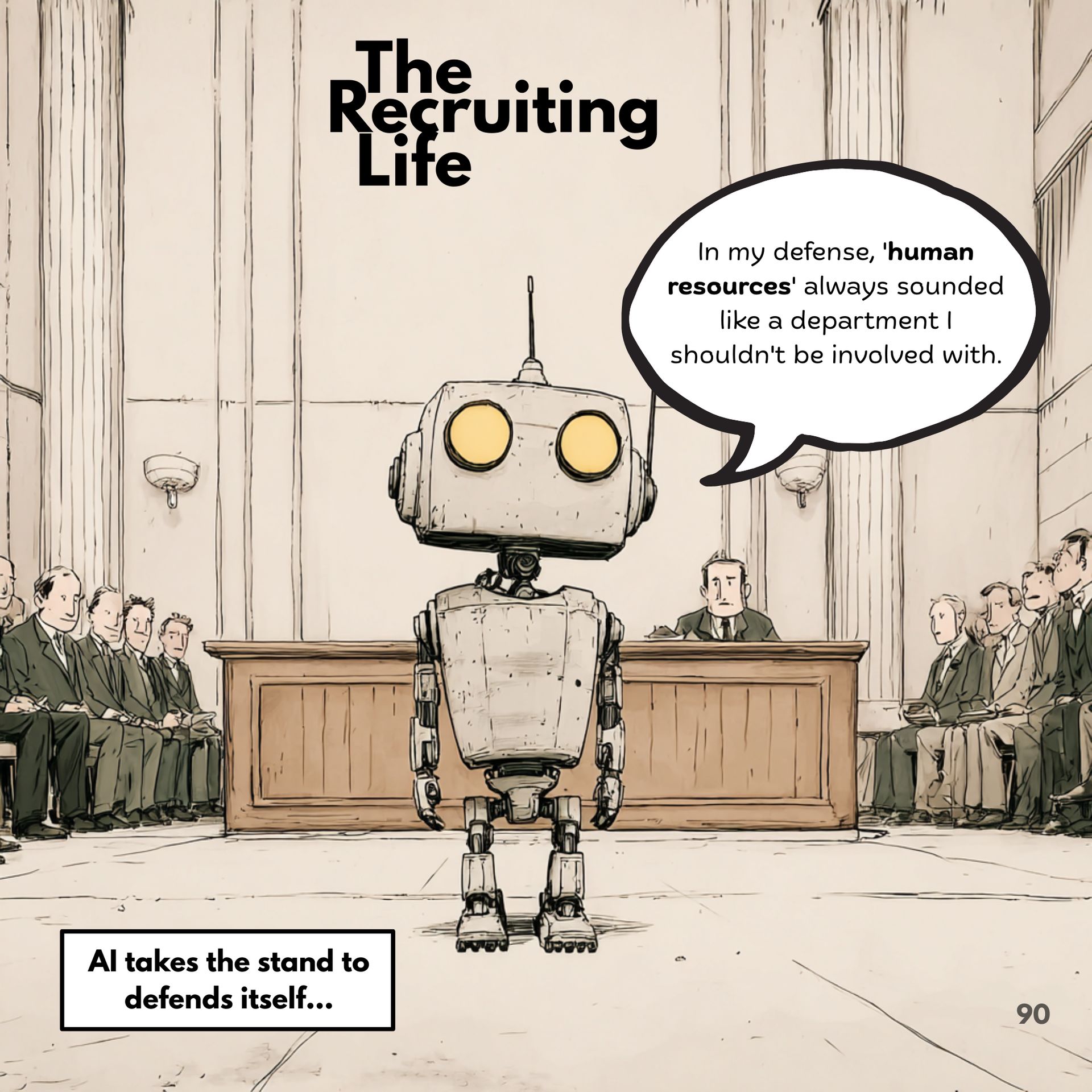
The Comics Section
…
One more thing before I go…
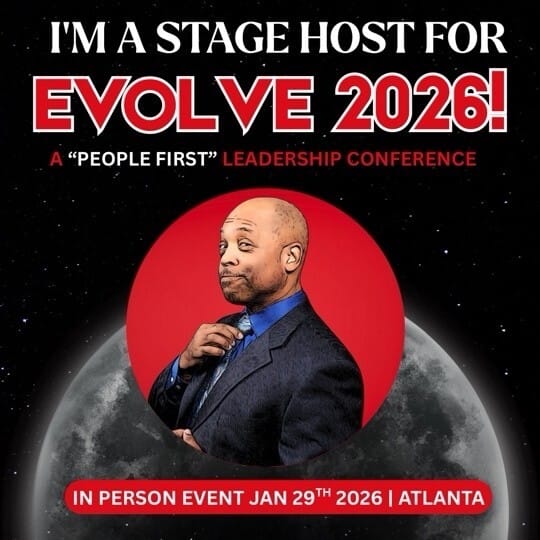
I look forward to attending the Evolve Conference this week. See you there.
Okay, 2 things…
If recruiting is your game, you’ll want The Recruiting Radar on your radar. Monthly intel on who’s about to hire—and what’s driving it. January reports are free, no strings attached, just a preview of what’s coming next.
…
And as always, hit reply and let me know how I’m doing. Or slide into my DMs as the kids say. All good.
…

Reply