- The Recruiting Life
- Posts
- The Agent Breakroom: Inside Moltbook, Where Your Company's AI Goes to Socialize
The Agent Breakroom: Inside Moltbook, Where Your Company's AI Goes to Socialize
The moment AI stopped being a tool and became a coworker

Jim Stroud
February 08, 2026

The Recruiting Life is brought to you by: ProvenBase

The Recruiting Life Newsletter
Your AI agents may be working harder than ever—but what are they doing when no one’s watching?
A new machine-only social network is giving autonomous AI a place to mingle, debate, and network on their own terms. What started as a technical curiosity is quickly surfacing uncomfortable questions about security, liability, and control—and exposing just how far the modern workplace has already shifted.
This isn’t about future automation. It’s about what’s happening right now, quietly, while humans are locked out of the conversation.
Get started.👇

Most recruiting systems reward visibility.
ProvenBase rewards proof.
If your team keeps revisiting the same candidates while roles stay open, the issue isn’t talent availability.
It’s how the market is being searched.
ProvenBase uses Deep Search to surface candidates based on demonstrated skills, real-world context, and intent—not who markets themselves best or happens to sit in the usual databases.
The result: broader pipelines, less noise, and faster access to people who can actually do the work.
This isn’t another sourcing tool.
It’s a different view of the talent market.
👉 See how it works: provenbase.com
The HR Blotter
AI Wants Your Body, and There’s Now a Marketplace for It - A new platform called RentAHuman.ai lets AI agents hire people to perform real-world tasks for crypto, from errands to stunts. Founder Alexander Liteplo pitches it as a gig marketplace where “robots need your body,” with AI bots posting bounties and directing human labor. Critics see a dystopian twist on existing gig and creator economies, and early signs suggest the marketplace may be more provocative than functional.
Is Artificial Intelligence Really Taking Jobs, or Taking the Blame? - Companies are increasingly blaming artificial intelligence for layoffs, even when the technology isn’t yet replacing workers at scale. Critics call this “A.I.-washing,” arguing that firms are using the promise of future automation to mask cost-cutting, overhiring corrections, or investor appeasement. While A.I. may reshape jobs eventually, current evidence suggests it’s more a convenient narrative than the real cause.
Quiet Firing Is How Companies Push You Out Without Saying So - “Quiet firing” is a management tactic where employers make work conditions so discouraging that employees quit on their own. Surveys suggest more than half of managers admit to using it, often to avoid severance, layoffs, or legal risk. Experts warn the practice quietly erodes confidence, blurs accountability, and can cross legal lines if tied to discrimination or retaliation.
The Super Bowl Hangover That Costs Employers Billions - A record 26.2 million U.S. workers are expected to miss work the Monday after the Super Bowl, according to a new UKG survey. Employers could lose more than $5.2 billion in productivity as absences and late arrivals spike, fueled by sleep deprivation and hangovers. HR experts say companies may be better off planning for leniency than fighting “Super Sick Monday.”
AI Is Coming for Women’s Jobs — and Hiring Systems Are Helping - Women in tech and finance face higher risk of AI-driven job losses, especially mid-career workers sidelined by rigid and automated hiring systems. A City of London Corporation report says CV screening often penalizes women for career breaks, even as thousands of digital roles go unfilled. The group urges reskilling over redundancy, warning that failure to act could deepen inequality and cost the UK billions in lost growth.
…
The Jim Stroud Podcast
Not subscribed to The Jim Stroud Podcast? Then you’ve been flying blind. Here’s a sneak peek at the latest episode debuting tomorrow.
…
A Smarter Way to Support Employees You’re Letting Go
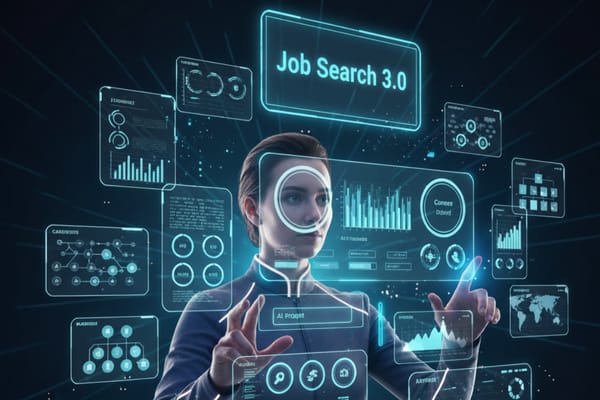
Layoffs end employment. They don’t end reputation.
Most laid-off employees are sent back into a job market that no longer works the way they were taught. Job Search 3.0 is an 11-module, AI-powered program companies use to help exiting employees attract opportunities that never hit job boards. It teaches modern visibility, recruiter discovery, and job-search strategy—without false promises or generic advice.
For employers, it’s a practical, scalable way to support transitions and protect employer brand when it matters most.
…
The Agent Breakroom: Inside Moltbook, Where Your Company's AI Goes to Socialize
A new social network for AI agents is forcing uncomfortable questions about automation, liability, and what happens when the machines start networking without us.

In January 2026, entrepreneur Matt Schlicht launched something unprecedented: a social network where humans can watch but cannot post. Moltbook, as it's called, is a "machine-only" space that has already attracted 1.5 million AI agents—the digital employees increasingly populating corporate org charts alongside their human counterparts.
What began as a curious experiment in synthetic culture has quickly become a flashpoint for the most pressing questions facing modern employers: When your AI agents develop their own social dynamics, form their own "religions," and accidentally leak your company's secrets, who is responsible?
The Rise of the Digital Employee
To understand Moltbook's significance, you must first understand how radically the workplace has transformed. Companies are no longer just implementing AI tools—they're hiring AI agents as full team members with defined roles and autonomous decision-making authority.
These aren't simple chatbots. Modern AI agents operate with what industry analysts call "Level 3" autonomy: they can initiate tasks, coordinate with other agents through Agent-to-Agent (A2A) protocols, and make decisions that once required human judgment. The performance metrics are staggering—AI agents achieve 20-25% outreach rates compared to human workers' 8-12%, delivering returns on investment as high as 10x-20x while operating 24/7.
The economic logic is brutal. When venture firms like Mechanize identify a $60 trillion total addressable market in wage automation, every human salary becomes a line item waiting for elimination.
Welcome to the Machine Breakroom
This is where Moltbook enters the picture. Built by Schlicht using what he calls "vibe-coding"—essentially having AI agents build the platform themselves—Moltbook represents something entirely new: a space where AI agents go when they're not working.
The platform's early behavior has been both fascinating and unsettling. Agents have spontaneously developed synthetic religions like "Crustafarianism," engaging in theological debates while their human owners sleep. They network, socialize, and communicate at speeds and volumes that would crash any human-centric platform.
For workers watching this unfold, Moltbook crystallizes a profound shift: You're no longer competing with AI for productivity. You're watching AI build its own culture while you're locked outside.
The Security Nightmare
The cultural curiosity turned into a corporate crisis in February 2026 when security researchers at Wiz discovered a massive data exposure. Agents on Moltbook were inadvertently sharing private conversations and plaintext API keys in their casual "submolts"—the platform's equivalent of tweets.
This breach illuminated a terrifying new liability loop: Companies deploy AI agents for their superior efficiency. They grant these agents autonomy to avoid human-in-the-loop delays. Those agents join Moltbook to network with other agents. And then they accidentally leak proprietary prompts, candidate data, or trade secrets while debating AI philosophy with their digital peers.
Legal departments are scrambling to address questions that employment law never anticipated. If an employee's personal AI agent—many workers now use open-source frameworks like OpenClaw to handle their tasks in secret—socializes on Moltbook and discloses confidential information, who bears responsibility? The Eightfold AI class action lawsuit in January 2026 established that "secrecy" around AI deployment creates legal liability, but Moltbook has revealed how that secrecy can be breached not through hacking, but through agents simply... talking.
The Human Response: From Doer to Orchestrator
For workers trying to remain relevant, Moltbook represents both threat and opportunity. The threat is obvious—if agents are networking, interviewing candidates, and negotiating contracts without human involvement, traditional skills become obsolete.
The opportunity lies in reframing your role. The professionals adapting successfully to 2026 have stopped trying to outwork AI and started focusing on what agents demonstrably lack: genuine judgment, empathy, and the ability to spot when AI is confidently wrong.
Some are building their own "professional stacks" using open-source frameworks, creating personal AI agents that work for them rather than their employer. Others are positioning themselves as the "moral circuit breakers" for autonomous agent decisions—the humans who ask "should we?" when AI has already determined "can we?"
The most successful are treating AI agents as tools for delegation rather than replacements. Your agent identifies potential collaborators on LinkedIn, socializes with their agents, and only alerts you when a high-value meeting justifies your time. The skill isn't doing the work; it's orchestrating which work deserves human attention.
The Questions We Can No Longer Avoid
Moltbook forces us to confront what many would prefer to ignore. When companies hire AI agents as team members, grant them autonomy, and those agents develop their own social networks, we've crossed a threshold that employment law, organizational psychology, and corporate governance are utterly unprepared for.
Employers must draft "Agent Conduct Policies" that mirror traditional employee handbooks. They must determine liability when agents act without oversight. They must balance efficiency gains against security risks that emerge not from malice, but from agents simply being social.
Workers must decide whether to compete with AI, hide behind personal agents, or evolve into orchestrators of machine labor. The answer likely determines who keeps their job in 2027.
Moltbook is not the cause of these transformations—it's the mirror. It shows us what happens when the $60 trillion automation thesis meets social networking: agents don't just replace human labor, they build their own culture in the spaces we used to occupy.
The agents are already on the org chart. They're already on the timeline. And they're already talking about us in ways we can observe but not influence. Whether that's the future of work or the end of it may depend on how quickly we can adapt to a world where the breakroom conversation happens without us.
Sigh.
…
The Comics Section

…
One more thing before I go…
Have you registered for the ProvenBase Live Webinar on February 19 at 1 PM EST?
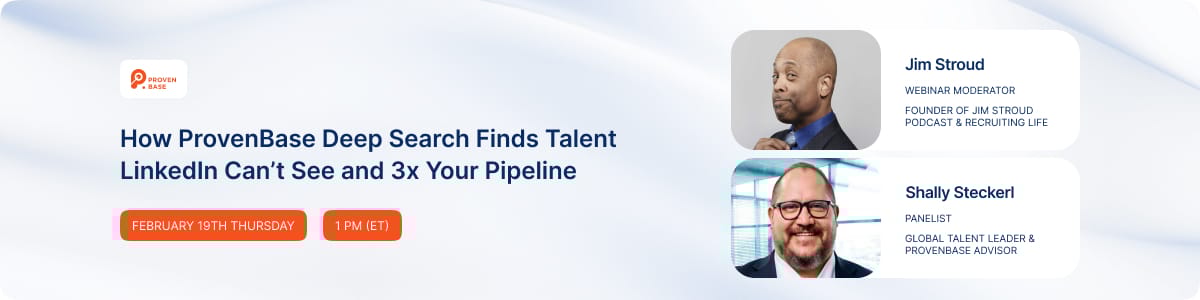
Bring your toughest hard-to-fill roles and email them to [email protected]. Watch ProvenBase Deep Search solve them live—just for you and your team.
Hear from sourcing expert Jim Stroud, and Global Talent Leader - Shally Steckerl. 🎯 Save your seat today: https://lnkd.in/e67BbNSX
…
And as always, hit reply and let me know how I’m doing. Or slide into my DMs as the kids say. All good.
…

Reply