- The Recruiting Life
- Posts
- What If Companies Had to Warn You Before AI Took Your Job?
What If Companies Had to Warn You Before AI Took Your Job?
AI may not eliminate your job overnight. It may simply make sure no one is ever hired to replace you.

Jim Stroud
August 09, 2026

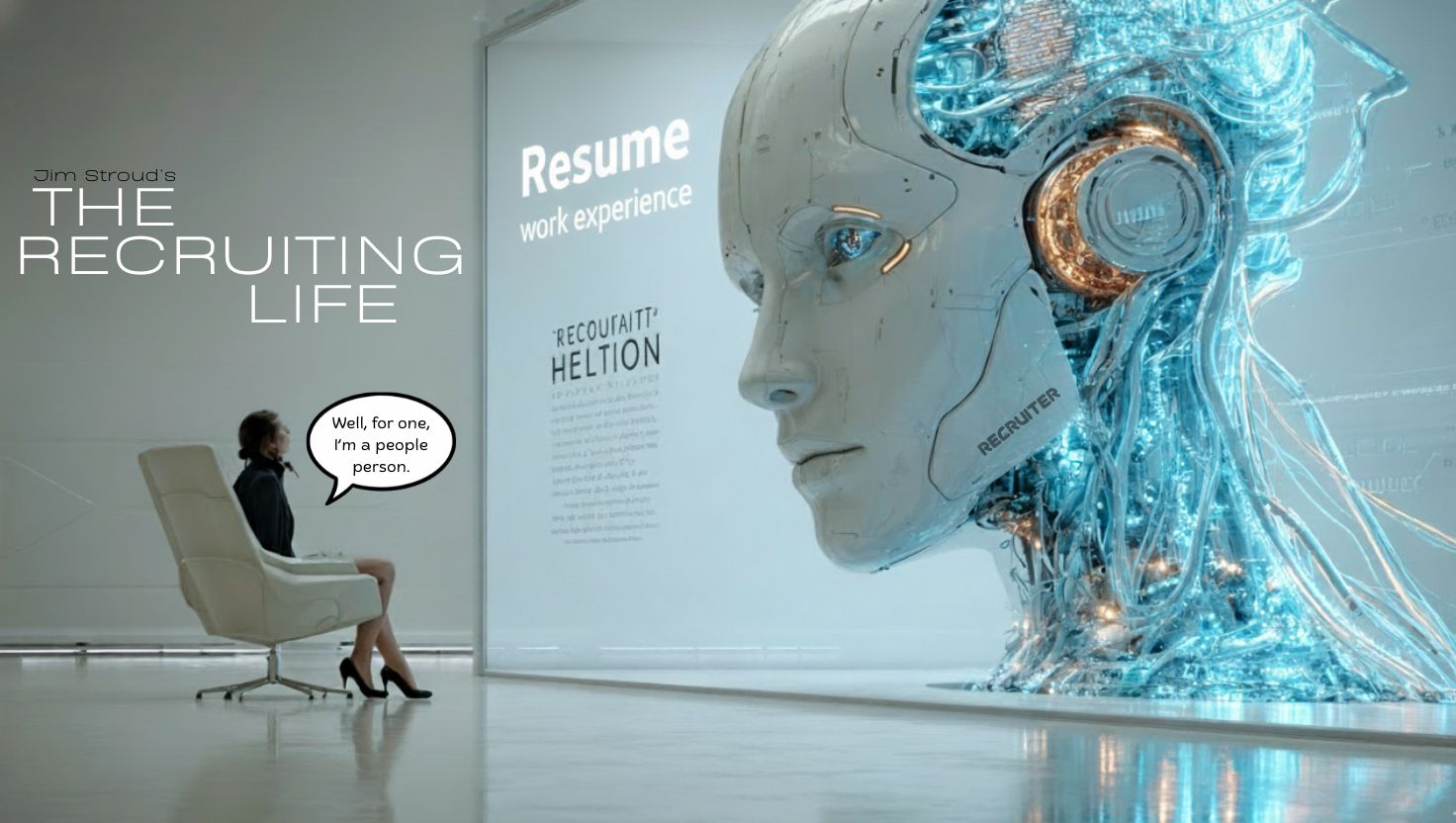
The Recruiting Life Newsletter
the skinny
AI may not take your job in one dramatic sweep. It may take the next hire, the backfill, the opening that never gets posted. California is asking whether companies should have to say when automation is part of the reason. For workers, employers, and recruiters, the bigger question is what happens when job loss gets quiet enough to hide in plain sight.
Read. 👇
Sponsored by ProvenBase
Your “great hire” is not a bargain. It is a warning light.
Experience is getting harder to find and harder to replace.
ProvenBase helps you see seasoned talent others are missing.
They are not cheaper. They are simply unseen.
What If Companies Had to Warn You Before AI Took Your Job?
There is a particular kind of corporate sentence that usually arrives after the decision has already been made: “We are restructuring the organization to better position ourselves for the future.”
Everybody knows what comes next. Jobs disappear. Teams shrink. Work gets redistributed. Somebody mentions efficiency. Somebody else mentions transformation. And somewhere in the presentation, artificial intelligence is standing quietly in the corner pretending it had nothing to do with any of it.
California is wrestling with an interesting question: What if companies had to say so?
The idea is taking shape in California Senate Bill 951, legislation that would expand workforce reporting when artificial intelligence or automated technology plays a substantial role in certain layoffs. Under the bill’s July 2, 2026 amended language, employers already required to provide Cal/WARN notice would also have to disclose information such as the occupations affected, job functions being automated, and the category or type of technology involved. Even more interesting, employers would have to notify the state when they permanently stop hiring or contracting for a particular occupation or position because of AI or automation, even if overall employment does not immediately decline.
That second provision may be where the real story is hiding. AI may not come for your job with a cardboard box. It may simply make sure nobody is hired to replace you.
The Layoff That Never Happens
Traditional workforce laws were built around visible events. A factory closes. An office shuts down. Hundreds of employees are terminated. Under the federal Worker Adjustment and Retraining Notification Act, covered employers generally must provide at least 60 days of advance written notice before certain plant closings and mass layoffs. The basic idea is straightforward: people deserve some time to find another job, pursue training, and prepare for what is coming.
AI displacement can be much harder to see. A company loses ten customer-service representatives and replaces only five. Then three. Eventually, none. An accounting department that once hired twenty graduates a year hires twelve. A recruiting organization that once employed fifteen sourcers decides five recruiters armed with AI can handle the workload. Technically, there may never be a dramatic mass layoff. The jobs simply stop coming back.
For workers, requiring disclosure creates an obvious advantage: time and information. Research from the Federal Reserve Bank of Cleveland found that the federal WARN Act substantially increased the incidence of lengthy advance notice after it took effect. Advance warning gives employees a chance to activate networks, pursue another role internally, begin training, or start interviewing before the paycheck disappears. California’s Rapid Response system can also connect affected workers with job-search assistance, training opportunities, and unemployment resources.
There is a downside. Imagine being told your position will disappear in sixty days because management has concluded that technology can perform enough of your work to eliminate your job. You still have meetings. You still have goals. You may even be expected to document processes or help implement the system replacing you.
Sixty days can be preparation. It can also be a very long goodbye.
Companies Get Transparency and Complexity
For employers, rules like these could create better discipline around AI decisions. If executives must identify which occupations are affected, which functions will be automated, and whether new jobs are being created elsewhere, it becomes harder to hide behind vague promises about “efficiency.”
That could force a better conversation before jobs are eliminated. Does the technology really replace the employee, or does it change what the employee should be doing? Could that person move into quality control, exception handling, customer interaction, AI supervision, or some other higher-value work? Requiring companies to think through those questions could turn some layoffs into redeployment.
The problem is that real transformation is rarely clean. A company might automate 30 percent of a job, outsource another portion, reorganize the department, suffer declining demand, and eventually decide it needs fewer employees. Was the resulting job loss caused by AI, the economy, restructuring, outsourcing, or all four?
That creates compliance risk and plenty of room for argument. A poorly designed law could also encourage employers to become creative about avoiding obvious triggers. Instead of laying off fifty people at once, a company could freeze hiring, increase contractor usage, rely on attrition, or spread reductions across a longer period. The workforce still shrinks, only more quietly.
That is why focusing on the moment a company buys or deploys AI would be a mistake. AI exposure is not the same thing as AI displacement. The stronger approach is to focus on identifiable employment consequences.
Recruiters May See the Future First
Recruiters sit in one of the most interesting positions in this debate because they often see workforce change before almost anyone else.
The warning signs usually begin with requisitions, not terminations. A role that opened every quarter suddenly stops opening. Hiring managers ask whether one employee with AI can handle work previously assigned to three. Job descriptions absorb responsibilities that belonged to eliminated positions. Entry-level hiring declines while demand increases for experienced workers capable of supervising automated systems.
If governments begin tracking occupations where employers permanently stop hiring because of automation, talent acquisition data could become an early-warning system for technological displacement. For recruiters, that could elevate workforce planning, skills intelligence, talent redeployment, and internal mobility from HR talking points to business necessities.
There is an uncomfortable side to that opportunity. Recruiters may also be among the first people asked to document the disappearance of their own work. Sourcing, screening, scheduling, research, candidate communication, and recruiting administration are already obvious targets for automation.
The people reporting AI displacement may eventually be reporting themselves.
The Real Question
The best version of AI workforce regulation should not be designed to stop automation. Technology has been eliminating some jobs, transforming others, and creating new ones since long before anyone typed their first prompt. Programs for displaced workers already wrestle with the harder problem of helping people move into different jobs and industries, a challenge that could become more important if AI-related disruption accelerates. The Bipartisan Policy Center’s review of displaced-worker programs makes that weakness clear: advance warning matters much more when meaningful transition support exists behind it.
The real question is whether workers should discover the transformation before or after their employer has already completed it.
Companies should not have to sound an alarm every time they install new software. But when leadership has made a reasonably definite decision that technology will materially eliminate jobs or permanently eliminate the need to hire certain workers, there is a strong argument that employees, recruiters, workforce agencies, and communities should know.
Because the most consequential layoffs of the AI era may never look like layoffs at all.
They may simply be jobs that disappear so quietly nobody notices they are gone.
…
Career Intelligence Weekly
In my other newsletter, I look at the Stay at Home Boyfriend Economy and the signal this trend is sending to your HR department. Check it out here and subscribe.

The Stay-at-Home Boyfriend Economy: Why Women Own the Jobs of the Future
…
The HR Blotter
The Jobs Number Went Backward and Nobody Wanted to Say It Out Loud - Payrolls dropped 23,000 in July against a forecast of 83,000 gained, with government shedding 53,000 slots. The jobless rate slipped to 4.1%, but only because participation fell to 61.4%, a floor not touched in five years. Wages crawled two cents higher, dragging annual pay growth to 3.2% and the weakest reading since May 2021.
Ten Graduate Degrees That Cost More Than They Return - FinanceBuzz lined up ten master's degrees with thin pay and thinner hiring, from architecture down to journalism. Fine arts and music both sit at zero projected growth, elementary education at negative two percent, journalism at negative four. Rehabilitation counselors bring home $46,110 to help disabled people rebuild their lives, which the article sums up as essential work nobody should take for the money.
The Boss Who Pays Top Dollar Suspects You Only Want the Money - Axios reports Dario Amodei worries that recruits at his $965 billion company came for the paycheck rather than the mission. The same firm is steering toward a trillion-dollar public offering, which would hand its safety mandate over to Wall Street. Amodei also predicts AI will erase half of entry-level office work, so the new hires may just be reading the room.
AI Isn't Taking the Job. It's Shaving the Paycheck - Apollo Global Management found workers in AI-exposed occupations saw real wage growth slow by 6.7 percentage points after 2023, with no measurable hit to employment. The bottom wage quartile absorbed the worst of it at 10.7%, while the top quartile felt nothing at all. Twenty-nine percent of knowledge workers admit sabotaging their own company's AI rollout, and among Gen Z that number climbs to 44.
They Quit Apple. The Secrets Followed Them Home - More than half a dozen former Apple staffers found confidential product planning files still syncing to personal iPhones long after their last day. Apple folds its 2TB storage perk into workers' personal Apple accounts, and offboarding only wipes one managed folder, leaving anything shared through iMessage untouched. Some ex-employees were afraid to delete the documents at all, fearing that hitting trash would look like destroying evidence.
…
The Jim Stroud Podcast
Not subscribed to The Jim Stroud Podcast? Then you’ve been flying blind. Here’s a sneak peek at the latest episode debuting tomorrow. One in five LinkedIn users has rewritten a job they already left. A new Stanford study caught "time travelers" adding AI skills to old roles, deleting DEI, and letting chatbots ghostwrite their pasts. What the edits reveal, and why a freshly polished old job is the loudest hire-me signal nobody is watching.
…
The Comics Section

…
One more thing before I go…
I am hosting a webinar later this month. Spread the word and register now!
Talent sourcers play a critical role in shaping hiring outcomes, but their impact is often underrecognized. Whether you're an individual contributor, a new manager of sourcers, or a functional leader, come learn how to articulate the value talent sourcing in your organization offers in business terms, highlight the metrics that matter, and position talent sourcing as a strategic partner rather than just an extra pair of recruiting hands.

…

Reply