- The Recruiting Life
- Posts
- The Next Great Employee Benefit Is Becoming Irreplaceable
The Next Great Employee Benefit Is Becoming Irreplaceable
Salary matters. Benefits matter. But in the age of AI, employees may start asking what their next job will do for their future.

Jim Stroud
October 11, 2026

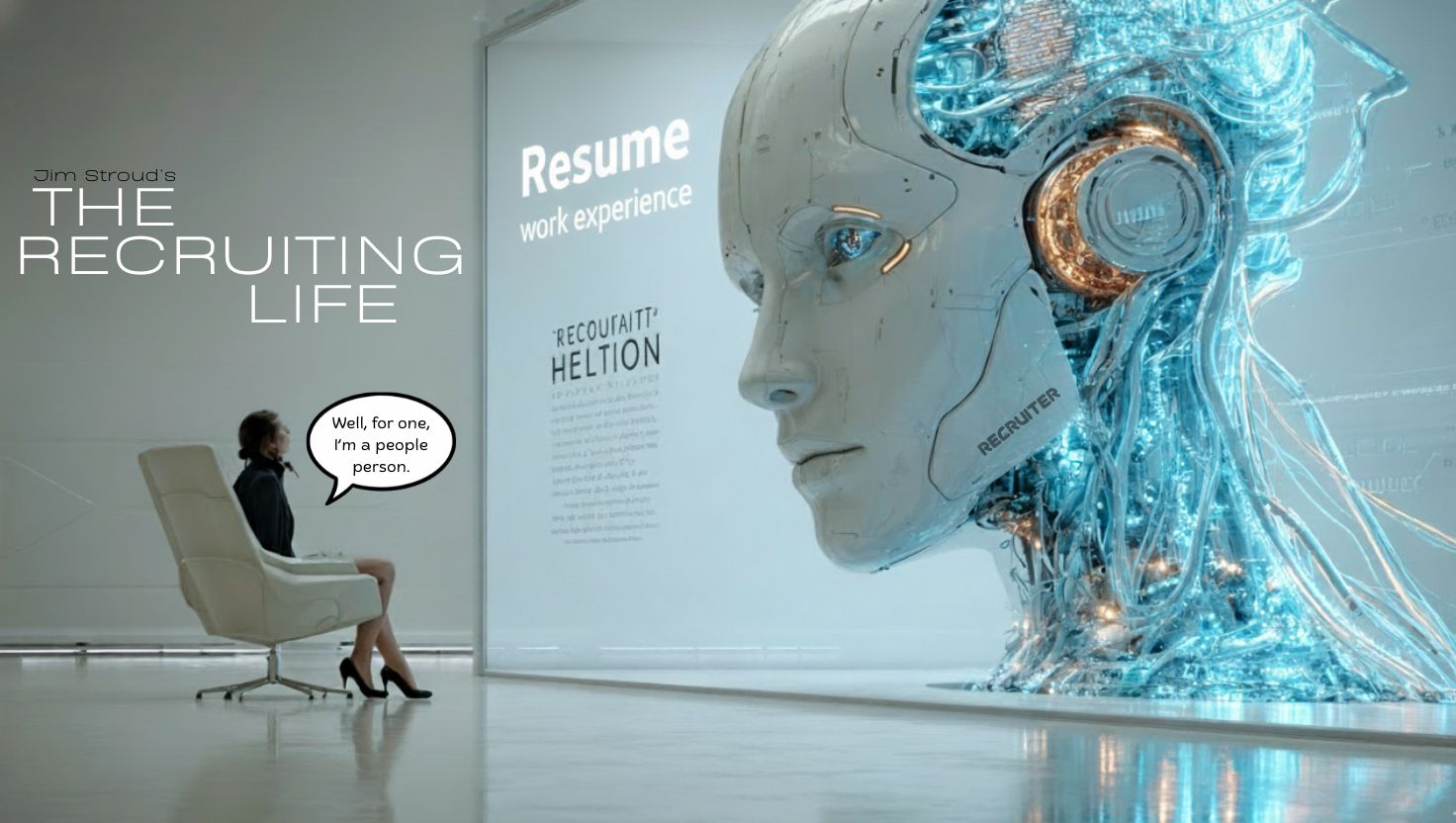
The Recruiting Life Newsletter
the skinny
Your employer could be making you obsolete while paying you well.
As AI reshapes work, the best employee benefit may not be salary, perks, or remote work. It may be an employer that makes you more valuable with every passing year.
Read why that matters. 👇
Sponsored by ProvenBase
ProvenBase helps you find the talent others overlook.
Stop competing for the same candidates. Start discovering people with the potential to take your business further.
The Next Great Employee Benefit Is Becoming Irreplaceable
Somewhere right now, a recruiter is trying to convince a candidate to leave a perfectly good job. The money is competitive. The benefits are solid. There's flexibility, a reasonable commute, and maybe even a signing bonus. Everything a recruiter would normally put on the table is there.
But I wonder how long it will be before candidates start asking a different kind of question.
Not how much will you pay me, but what will I be worth after working for you?
It's a question employers should be preparing to answer, because artificial intelligence is changing more than how work gets done. It's changing how people accumulate experience, how careers develop, and potentially how employees judge the value of an employer.
For years, companies have competed for talent by offering better versions of roughly the same things. More money. Better insurance. Flexible schedules. A culture where people supposedly love coming to work. Look at enough corporate career pages and the promises begin to sound interchangeable.
There's nothing wrong with those benefits. People have bills to pay and lives to live. But an employee can enjoy a generous salary, work for a respected organization, and still discover five years later that the skills they've spent their career developing are becoming less valuable.
That's a frightening possibility. Especially when the technology changing those skills is being introduced by the same employer promising them a bright future.
The experience problem nobody wants to inherit
Consider what happens when a company automates the routine work traditionally assigned to junior employees.
In recruiting, that might mean searching databases, reviewing resumes, identifying prospects, or drafting candidate communications. In finance, it could involve preparing reports and reconciling information. In cybersecurity, AI might handle the preliminary analysis of security alerts.
From a productivity standpoint, the argument is compelling. Why pay someone to spend hours performing work that software can finish in minutes?
But there is something easy to overlook.
Those assignments weren't simply chores. They were how people learned.
A junior recruiter reviewing hundreds of profiles gradually develops an instinct for what a strong candidate looks like. A new analyst discovers which numbers deserve attention because they've spent time wrestling with the numbers that don't. A cybersecurity professional learns to recognize unusual behavior after investigating plenty of ordinary incidents.
The work may have been repetitive, but the experience was cumulative.
Now imagine removing those assignments without replacing the learning they provided. You may end up with a more efficient operation today and a shortage of experienced employees tomorrow.
The concern is not entirely theoretical. Research from Stanford's Digital Economy Lab found that employment among workers ages 22–25 in highly AI-exposed occupations was approximately 19% below the level suggested by employment trends among young workers in less-exposed occupations. The researchers caution that the evidence does not prove AI caused the difference, but the pattern deserves attention.
Meanwhile, Gartner reported in 2026 that 22% of surveyed CHROs said at least one business leader had stopped hiring for entry-level positions because of AI automation.
I can understand the business logic. What I question is whether enough employers have considered the consequences.
You cannot recruit ten years of experience from someone who was never given year one.
What if career development becomes the benefit?
Here is where I think employer branding could take an interesting turn.
Suppose two hospitals are competing for the same nurse. Their compensation packages are comparable. Both offer reasonable schedules and modern facilities. But one hospital can demonstrate how its nurses develop specialized clinical expertise, receive mentorship, and move into more advanced responsibilities.
Or consider two manufacturers competing for a maintenance technician. One talks about competitive wages and a great workplace culture. The other can show a path from routine equipment maintenance into advanced automation, controls, and industrial troubleshooting.
Which offer looks more attractive to someone thinking about the next ten years of their career?
The answer won't always favor the employer offering more development. Immediate financial needs matter, and promises of training are worthless if working conditions are poor. Still, the ability to build valuable expertise could become a meaningful difference between otherwise similar employers.
I think recruiters should be paying attention to this.
For years, we've talked about an employer's value proposition. Usually, that conversation revolves around what employees receive while they're working for the organization. But perhaps the next version should include what employees become because they worked there.
Not another generic promise about professional growth. Actual evidence.
Show candidates the skills employees develop during their first two years. Explain which difficult decisions they'll eventually be trusted to make. Introduce the people who will mentor them. Demonstrate how the organization helps employees adapt when technology changes their responsibilities.
Imagine an employer able to say, with evidence, that its people leave more capable than they arrived.
That's a recruiting message worth investigating.
The companies building talent may have the advantage
There is a tendency in recruiting to treat skills shortages primarily as sourcing problems.
Can't find enough experienced candidates? Expand the search. Increase compensation. Hire another agency. Purchase another technology platform. Search a different database.
Sometimes those are exactly the right decisions. But sourcing technology cannot manufacture experience that nobody has had the opportunity to acquire.
This is particularly important in industries such as healthcare and manufacturing, where practical expertise takes time to develop and mistakes can carry serious consequences.
A promising example of a different approach comes from IBM's plans to expand entry-level hiring while redesigning junior positions around problem-solving, AI use, and more complex responsibilities. Rather than assuming automation eliminates the need for beginners, the company is reconsidering what beginners should learn.
That distinction matters.
An employer that invests in developing people is doing more than filling today's openings. It's creating tomorrow's experienced workforce.
And while competitors can imitate compensation packages, purchase similar technology, or copy recruiting campaigns, building an effective system for developing expertise takes time. It requires capable managers, meaningful assignments, mentorship, and a willingness to let employees make mistakes while they learn.
Those things are much harder to buy off the shelf.
Of course, some executives will object. What happens if you invest in training someone and they leave for a competitor?
Fair question. But what happens if you don't train them and they stay?
An organization full of employees whose capabilities are becoming obsolete isn't necessarily enjoying great retention. It may simply be accumulating a problem that will become expensive later.
A question worth asking in the next interview
I don't believe salary, benefits, or flexibility are about to become irrelevant. Nor do I think employees will suddenly start choosing lower-paying jobs because a company promises to make them better at using AI.
But I do think the conversation around career security is changing.
According to PwC's 2026 Global AI Jobs Barometer, skills requirements in occupations most exposed to AI are changing more than twice as quickly as those in less-exposed occupations. That's a powerful reason for workers to care about whether their employer is helping them keep up.
A good job should do more than pay for the present. Ideally, it should prepare someone for the future.
Which brings me back to that recruiter trying to persuade a candidate to make a move.
Imagine the candidate asking, "What will I know how to do after two years at your company that I don't know how to do today?"
It's a reasonable question. Yet I suspect many employers would struggle to answer it with anything more specific than access to training courses, tuition reimbursement, or a vague promise about advancement opportunities.
The employers who can answer with real examples may find themselves with an advantage that goes beyond compensation.
Nobody is truly irreplaceable. Companies change, markets shift, and technology makes once-valuable expertise obsolete. Pretending otherwise would be dishonest.
But helping employees become more adaptable, capable, and valuable? That's a promise worth making, provided the company is prepared to deliver on it.
Maybe the best employer brand of the AI era won't promise people a job for life. Maybe it will give them a better chance at a career that survives whatever comes next.
…
One more thing before I go…
This week in the Career Intelligence Weekly: A Trump-Putin phone call just put Russian diesel back on the market, and every freight, farm and factory job in America feels the price. 👇

…

Reply