- The Recruiting Life
- Posts
- The Jobs Are Coming Back. The Career Ladder Is Not.
The Jobs Are Coming Back. The Career Ladder Is Not.
Part Two of “AI Is Eating the Bottom Rung of the Career Ladder”

Jim Stroud
September 27, 2026

This newsletter is courtesy of ProvenBase.
The Recruiting Life Newsletter
Heads up!
I’m experimenting with the format of this newsletter by trying to do more with less. Let me know if you like it, love it, or hate it. (I’m a big boy. I can take it.)
Read. 👇

Stop sourcing like everyone else.
ProvenBase helps you find qualified talent others cannot reach.
Bring us your toughest requisition. We’ll show you a different way to fill it.
The Jobs Are Coming Back. The Career Ladder Is Not.
Last week, I wrote about a problem hiding inside the AI productivity boom.
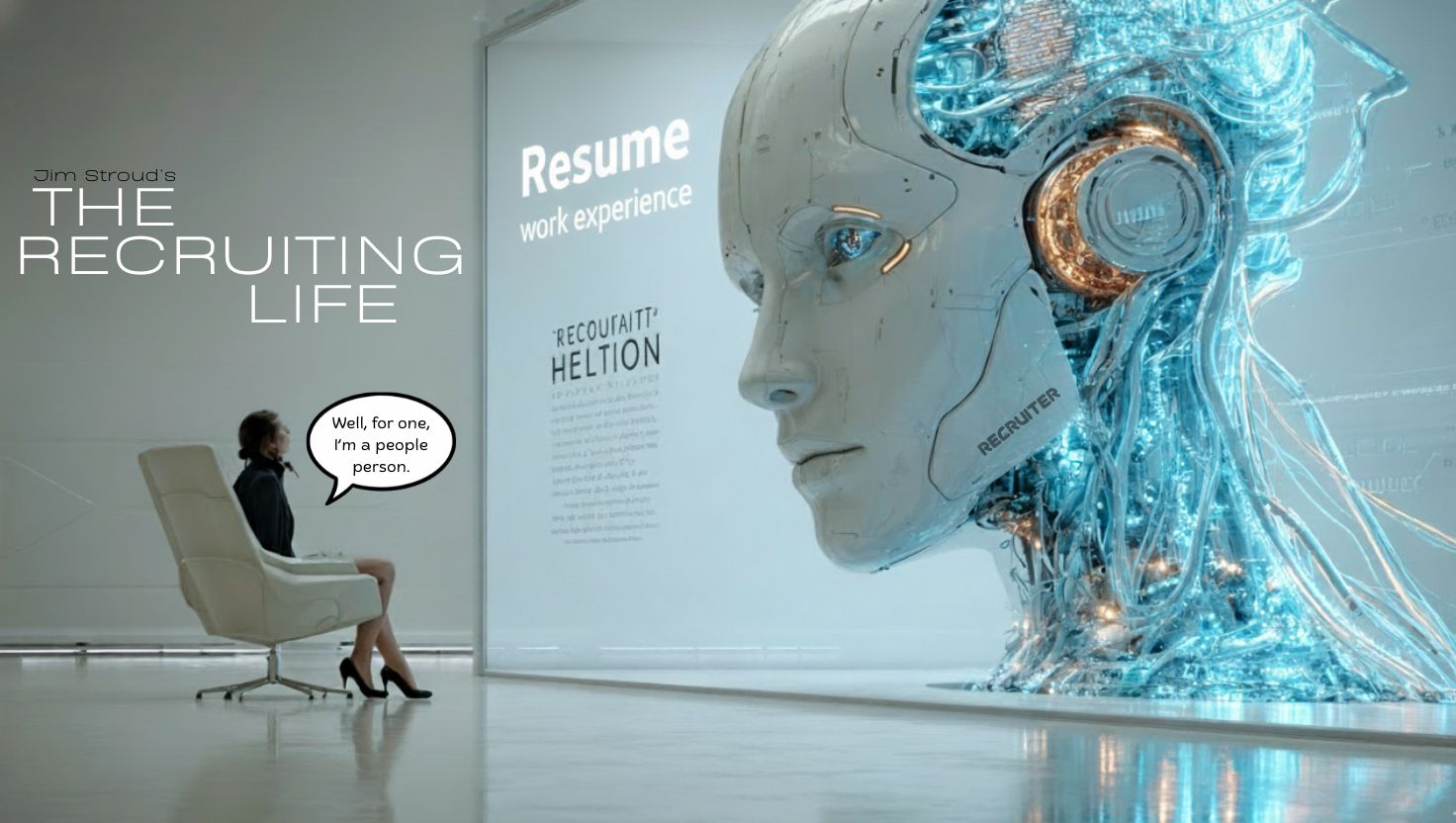
Companies are automating many of the routine tasks that once helped inexperienced workers become experienced. Junior programmers fixed simple bugs. New analysts built spreadsheets and prepared summaries. Entry-level recruiters screened resumes and conducted research. Those assignments were rarely glamorous, but they gave beginners a place to practice, fail, receive feedback and develop judgment.
AI is eating that work.
Now there is evidence of what may happen next. Some of the jobs most exposed to AI are beginning to return. That sounds encouraging until you look at who employers want to hire.
They want the people who already know what they are doing.
The Recovery Has a Seniority Problem
An Investopedia analysis of Indeed job-posting data found that software-development postings fell 73% between their February 2022 peak and February 2025. Since then, they have rebounded by nearly 21%, even as postings across the broader economy declined.
That is the good news.
The less encouraging detail is that software-development postings remain approximately 23% below their prepandemic level. Data-analytics postings remain 38% below theirs. More importantly, senior positions accounted for 71% of the growth in AI-exposed job postings between May 2025 and May 2026.
The wage data tells a similar story. Since 2021, advertised pay rose 45% for senior positions in highly AI-exposed occupations, compared with 24% for entry-level positions.
In other words, the market may be recovering, but it is not rebuilding the same ladder that collapsed.
Employers are paying more for experienced workers while remaining reluctant to invest in the people who could eventually replace them. It is as if a city demolished most of its elementary schools, then celebrated the opening of another university.
AI Did Not Create the Entire Slump
It would be convenient to blame every missing technology job on artificial intelligence. It would also be wrong.
The decline in software-development postings began months before ChatGPT arrived. Higher interest rates, reduced venture-capital investment, the post-pandemic technology correction and slower white-collar hiring all contributed to the contraction.
Recent research also shows that labor-market problems in AI-exposed fields began before the current generative AI boom. A 2026 working paper examining unemployment records, LinkedIn profiles and university curricula found that conditions in highly exposed occupations began deteriorating in early 2022. Graduate cohorts were entering those occupations at lower rates before ChatGPT’s public release.
AI is not the lone suspect standing over the body.
But it may be changing how the recovery unfolds.
When demand returns, employers do not necessarily recreate every position they eliminated. They redesign the work around new tools, smaller teams and higher expectations. The company that once hired four junior developers and one senior developer may discover that one senior developer using AI can handle much of the team’s previous output.
When that company begins hiring again, it may not reopen the four junior positions. It may look for another senior developer.
The vacancy returns. The apprenticeship does not.
Employers Are Buying Judgment
This shift makes sense from the perspective of an individual hiring manager.
AI can produce code, summarize data, draft documents, identify patterns and generate a respectable first attempt at many knowledge-work assignments. What it cannot reliably supply is accountability, institutional context or the instinct to recognize that a technically correct answer will create a disaster six months from now.
Employers therefore place a premium on people who can direct the technology, evaluate its output and intervene when something feels wrong.
The 2026 PwC Global AI Jobs Barometer, based on more than one billion job advertisements across 27 countries and territories, found growing demand for judgment, leadership and creativity in AI-exposed work. Entry-level positions requiring at least 10 skills previously associated with experienced employees grew 35% between 2019 and 2025. Other entry-level positions shrank 10%.
PwC calls this the “seniorisation” of entry-level work.
The label is polite. The reality is more severe.
Companies are not merely asking beginners to learn faster. They are asking candidates to arrive with capabilities that people traditionally developed through years of work: stakeholder management, strategic thinking, leadership, mentorship and judgment under uncertainty.
The job may say “entry level,” but the employer is shopping for a veteran at a rookie’s price.
Experience Has Become a Hiring Shortcut
There is another force pushing employers toward senior candidates.
AI makes it easier for applicants to produce polished resumes, tailored cover letters, convincing portfolios and technically competent work samples. That creates more applications, but it can also make those applications less useful as evidence of individual ability.
A September 2026 preprint from researchers at Stanford, Cornell and the University of Pennsylvania models what happens when AI-assisted application materials become less informative. Employers respond rationally by relying more heavily on signals that are difficult to manufacture, especially previous experience. The people hurt most are inexperienced candidates who are genuinely qualified but lack the work history needed to distinguish themselves.
This is theoretical research and has not completed peer review, but the mechanism is recognizable to anyone working in recruiting.
When every resume is optimized, experience becomes a convenient filter.
That filter may reduce evaluation costs, but it also eliminates candidates who could perform the job if given a credible way to demonstrate their ability. The problem is no longer simply that inexperienced applicants lack skills. They lack trusted evidence.
For recruiters, this creates an important distinction. Screening for experience is not necessarily the same as screening for capability. It may simply be the fastest available response to an application process overflowing with increasingly similar claims.
The First Job Matters More Than Employers Admit
It is tempting to view delayed entry into a professional field as a temporary inconvenience. Graduates can work somewhere else, build skills and return when hiring improves.
The evidence suggests careers do not always recover that neatly.
The Federal Reserve Bank of New York reported that unemployment among recent college graduates remained around 5.6% in the second quarter of 2026, while underemployment reached approximately 42%. That means a substantial share of graduates who found work were employed in positions that typically do not require a college degree.
An NBER study of more than 70,000 college graduates found that entering the labor market during a significant downturn reduced earnings by roughly 10% during the first year. Graduates recovered some of that loss by changing jobs and employers, but the initial conditions followed them for years.
More recent NBER research has found that the transition into a graduate’s first job strongly predicts earnings five years later and helps explain socioeconomic earnings gaps.
The first job is not merely the opening sentence of a career. It can influence the plot.
If graduates cannot enter AI-exposed professions when those fields begin recovering, the consequences may extend beyond this year’s unemployment rate. Employers could create a missing generation of workers who never received the assignments, mentors, relationships and credibility needed to advance.
The Senior-Talent Shortage Is Being Manufactured
Every employer wants someone who can contribute immediately. Few hiring managers volunteer to absorb the cost and uncertainty of developing an inexperienced person.
That preference is understandable at the company level. Across an entire labor market, it becomes self-defeating.
If most employers reduce junior hiring while competing for experienced workers, the supply of senior talent cannot replenish itself. Salaries rise. Time-to-fill increases. Recruiters chase the same visible candidates. Companies complain that qualified people are impossible to find.
Then they describe the result as a talent shortage.
But the shortage did not fall from the sky. Employers helped manufacture it by demanding experience while withdrawing the opportunities through which experience is created.
The result is a labor market with more openings at the top and fewer ways to climb there.
What Talent Leaders Should Do Now
The answer is not to preserve outdated entry-level work merely because it once served as training. No one benefits from forcing a junior employee to spend three years performing tasks that software can complete in seconds.
The better response is to separate development from drudgery.
Companies need structured ways for early-career employees to practice judgment without carrying the full risk of senior-level decisions. That can include supervised AI use, simulations, rotations, shadowing, apprenticeships, progressively difficult assignments and reviews in which experienced workers explain not only what decision they made, but why.
Recruiters also need better evidence than years of experience. Skills demonstrations, structured work samples and staged assessments can give capable beginners a way to prove themselves without relying on AI-polished application materials or an employment history they have not had time to build.
Finally, workforce planning must measure who is entering the pipeline, not only how efficiently today’s work is being completed. Revenue per employee may improve while the organization quietly destroys its future supply of managers, specialists and technical leaders.
Last week’s warning was that AI is eating the bottom rung of the career ladder.
This week’s evidence adds another piece to the story. Some of the jobs above that missing rung are returning, and employers are paying handsomely for people who already managed to climb.
That may feel like a recovery to senior workers. To everyone standing below them, it looks more like a locked door.
The long-term question is no longer whether the jobs will come back.
It is whether anyone new will be allowed to become qualified for them.

Reply