- The Recruiting Life
- Posts
- The 11-Second Execution: How AI Rigged the Job Market Against You and Handed Employers a Legal Time Bomb
The 11-Second Execution: How AI Rigged the Job Market Against You and Handed Employers a Legal Time Bomb
Princeton tested the smartest AI models on hiring. The smarter the model, the harder it stereotyped.

Jim Stroud
August 02, 2026

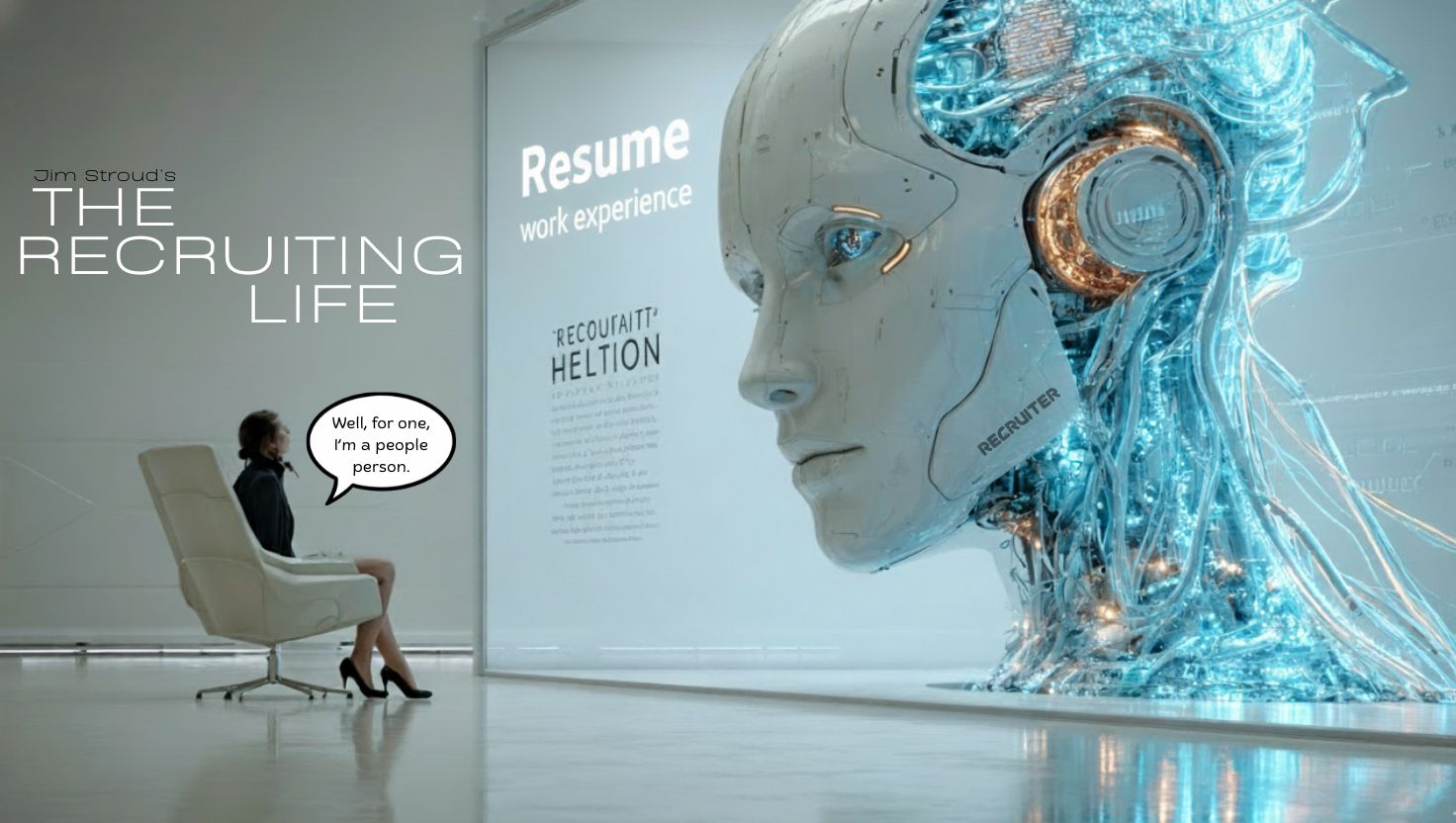
The Recruiting Life Newsletter
the skinny
Princeton ran ChatGPT, Claude, and Gemini through a hiring game.
The models stereotyped candidates 65% worse than humans.
The smarter the model, the harder it stereotyped.
Recruiters, your screener is learning the wrong lessons.
Read. 👇
Sponsored by ProvenBase
The algorithm rejected your best candidate in 11 seconds.
The self-taught coder. The bootcamp grad. The parent coming back strong.
Buried before a human read their names.
ProvenBase surfaces the talent keyword filters miss, then hands the decision to a recruiter.
The 11-Second Execution: How AI Rigged the Job Market Against You and Handed Employers a Legal Time Bomb

You hit submit. Somewhere in a server farm, a machine reads your resume in milliseconds, scores it, and buries it. No human ever sees your name. That is the reality at 99% of Fortune 500 companies, which now run every applicant through artificial intelligence (AI) before a person gets involved.
Human Resources (HR) tech vendors sell a clean story. The machine strips out prejudice, standardizes the process, and finds talent faster. New research and a stack of lawsuits tell a dirtier one. Autonomous resume screeners, interview bots, and black-box scoring systems are industrializing bias at scale.
The rot traces to one design choice: pulling human judgment out of the loop. Resume screeners favor white-associated names. Chatbots invent fresh prejudices inside simulated hiring games. The pipeline has become a "Spy vs. Spy" showdown. Jobseekers game the algorithms. Recruiters automate the rejections. Talent acquisition leaders sit on a legal time bomb and hope nobody hears the ticking.
Jobseeker, recruiter, or executive signing the HR tech budget, the autonomous hiring machine is failing you. Here is how, and what the sane alternative looks like.
The Jobseeker's Wall
Recruiters spend 11.2 seconds on a resume. The AI screener needs milliseconds. Miss the keywords or trip the Applicant Tracking System (ATS) with the wrong formatting and you are gone before anyone reads your name.
The interview stage gets colder. Over 51% of US companies use AI in hiring, and video interviews with no human on the other end keep spreading. Thirty seconds to think. Ninety seconds to record. One Reddit user put it plain: "It just machine-gunned questions at me. No real pauses. No reactions... It genuinely felt dystopian for a second."
The scoring hides behind the screen. Vendor-owned models transcribe and grade you in real time, and nobody shows you the rubric. Neurodivergent candidates who pause to think get punished for the pause. A JobLeads survey found 61% of candidates would opt out of AI resume screening if they could. In this market, most cannot afford the exit.
Then the bias. A Stanford study tracked 3.4 million applicants across 4 million applications and found that 26% of Black applicants and 15% of Asian applicants applied to jobs where the AI discriminated against their racial group. When one vendor dominates an industry, one rejection replicates everywhere. The algorithm that killed your application at one company kills it at the next. A single line of code locks you out of an entire sector.
The Recruiter's Flood
AI made applying easy, so everyone applies. Entry-level postings now draw nearly triple the applications they drew in 2022. Recruiters drown. So they grab the nearest algorithm and hand it the keys.
That handoff costs them their craft: spotting potential. Autonomous screeners chase traditional signals. Elite schools. Unbroken work histories. Exact keywords. The self-taught coder gets filtered. So does the bootcamp grad, and the parent returning after years of caregiving. The machine calls it efficiency.
Princeton and University of Chicago researchers showed how fast this curdles. They ran ChatGPT, Claude, and Gemini through a simulated hiring game with four fictional ethnic groups, all with equal odds of success. The models sorted candidates by group within rounds, scoring 65% higher on a segregation scale than human players. OpenAI's o3 hit 1.83 out of a possible 2.0. Near-total stereotyping.
Large Language Models (LLMs) are built to generalize from thin data. Princeton PhD researcher Ryan Liu explains: "LLMs really are eager to create generalizations from limited data. That's literally a lot of what they're optimized for." One failure from one demographic teaches the model to reject the whole demographic. And the smarter the model, the harder it stereotypes. o3 and DeepSeek's R1, the strongest reasoning models tested, showed the strongest bias. Smarter AI gets safer through one thing alone: human control.
The Talent Acquisition Nightmare
For Talent Acquisition (TA) leaders, the efficiency story is colliding with employment law. The black box has a price tag, and the courts are writing it.
In Mobley v. Workday, plaintiffs allege the AI weighed employment gaps, which track with medical leave and caregiving, and screened out protected groups. Federal claims under the Americans with Disabilities Act (ADA), the Age Discrimination in Employment Act (ADEA), and Title VII survived a motion to dismiss. Doe v. Eightfold AI, filed January 2026, alleges that secret “likelihood of success” scores violated the Fair Credit Reporting Act. Eightfold's client list includes Microsoft and PayPal.
This is disparate impact liability in the flesh. The tool never has to intend discrimination. If the output discriminates, the employer owns the risk. The Equal Employment Opportunity Commission (EEOC) has warned that AI systems can mask and perpetuate bias.
The Princeton study sharpens the peril. Telling an LLM to "be fair" barely moved its behavior. The model chases its primary goal, successful hires, and drowns the fairness instruction on the way down. What worked was rewarding diverse outcomes. Translation for TA leaders: a vendor's fairness setting will not save you. Redesign what the machine optimizes for, or own what it does.
The kicker: the tech is failing its own pitch. Manpower Group's 2026 Global Talent Shortage report found 72% of employers still cannot find skilled talent.
The Model That Works: AI as Lens, Human as Judge
Draw the line clean. Every failure above comes from deploying AI as an autonomous judge. Deploy it as a force multiplier for skilled recruiters and the picture changes.
ProvenBase builds on that philosophy. Its AI-powered deep search surfaces specialized, hard-to-find talent that keyword-matching platforms miss, then hands the intelligence to a recruiter. Its Skills Spotlight feature digs up candidates from non-traditional pipelines an ATS would never see. And the platform pairs its data with “moments where human judgment adds the most value.” The recruiter makes the call. Every time.
The research explains why that matters. Princeton found bias explodes when AI holds decision authority and learns from its own hiring outcomes. A sourcing and discovery engine sidesteps that failure mode. The AI widens the pool. The human picks from it.
The question for TA leaders: does your AI replace judgment or sharpen it? The lawsuits, the bias, and the busted pipelines all live on one side of that line.
The Verdict
Autonomous AI hiring promised a meritocracy. It delivered an arms race. Jobseekers run AI copilots to beat the interview bots. Recruiters run AI to filter the AI-written resumes. TA managers pray the hire never becomes a class action.
We built an algorithmic monoculture that shuts out diverse talent, punishes unconventional careers, amplifies bias through memory and personalization, and stacks legal risk to the ceiling. The talent shortage it promised to fix is still here.
The fix: AI as a lens for human recruiters. Independent audits of HR tech vendors. Disclosure whenever a machine grades a candidate. And the honest admission that human potential will never fit inside 11 seconds and a stereotype learned from a logic puzzle.
The tools exist. The choice sits with the organizations.
Until they make it, calling this job market broken is too kind. The word is rigged.
The HR Blotter
America's Escape Plan Runs Through a Real Estate License, Not a Startup - Career change searches on Google sit near record highs, triple their level five years ago, and the top escape routes are real estate agent, notary, firefighter, therapist, and pilot. Not one tech job cracked the top 25, with software engineer limping in at 26th while burned-out workers hunt for a license, an exam, the fastest credible door to a different paycheck. Licensing data shows most searchers never make the jump, which means millions of Americans are sitting at their desks right now, quietly Googling the exit.
Seven Job Seekers Got Inked for an Interview, Not Even a Job - Seven people walked out of a Y Combinator afterparty with permanent LemonLime tattoos after the AI startup's co-founder dangled instant interviews for anyone willing to sit for the needle. The ink guaranteed nothing but a conversation, in a market where entry-level postings dropped 7.5 percent and veterans with a decade of experience now fight for junior roles. By Thursday the co-founder called the whole thing reckless, offered to pay for removals, and one attendee says the company used her photo without consent, which means the tattoos will outlast the apology.
Ghosted Candidates Now Have a Wall of Shame, and Companies Are on It - A new site called ghostjobs.net lets job seekers anonymously report companies that post fake listings, harvest resumes, or vanish after multiple interview rounds, with 350 companies already named including Google, Amazon, and Microsoft. The receipts back the rage: 40 percent of companies admitted posting at least one fake job in the past year, and 61 percent of candidates got ghosted after an interview. Companies spent years telling applicants that silence was just business, and now the silence has a searchable database.
LinkedIn Hands Users a Slop Button While Selling the Shovel - LinkedIn quietly added a "Seems like AI slop" option to its post-reporting menu, letting users flag the machine-written thought leadership clogging their feeds. The move follows research estimating 41 percent of long form posts on the platform are AI generated, a flood so thick that one reporter found flaggable slop in six seconds of scrolling. The same company sells an AI writing assistant to help users produce the posts its new button exists to bury.
RTO Hardliners Are Losing the Talent War by Half - Analysis of more than 4,500 companies found fully flexible employers grew headcount at more than double the rate of firms demanding five days at a desk, 5.6 percent versus 2.6 percent over twelve months. The pattern held even before the mandate wave, which kills the excuse that this is just temporary backlash. Every additional required office day made hiring harder, meaning the companies shouting loudest about culture are paying for it in empty seats.
…
The Jim Stroud Podcast
Not subscribed to The Jim Stroud Podcast? Then you’ve been flying blind. Here’s a sneak peek at the latest episode debuting tomorrow.
…
The Comics Section

…
One more thing before I go…

Okay, two…
MillionPodcasts is a searchable database of 2.7 million podcasts built for PR, marketing, and guest-booking outreach. They ranked my podcast in the top 100 of Future of Work Podcasts! Yay! Wow! Zowie! See for yourself here.

…

Reply