- The Recruiting Life
- Posts
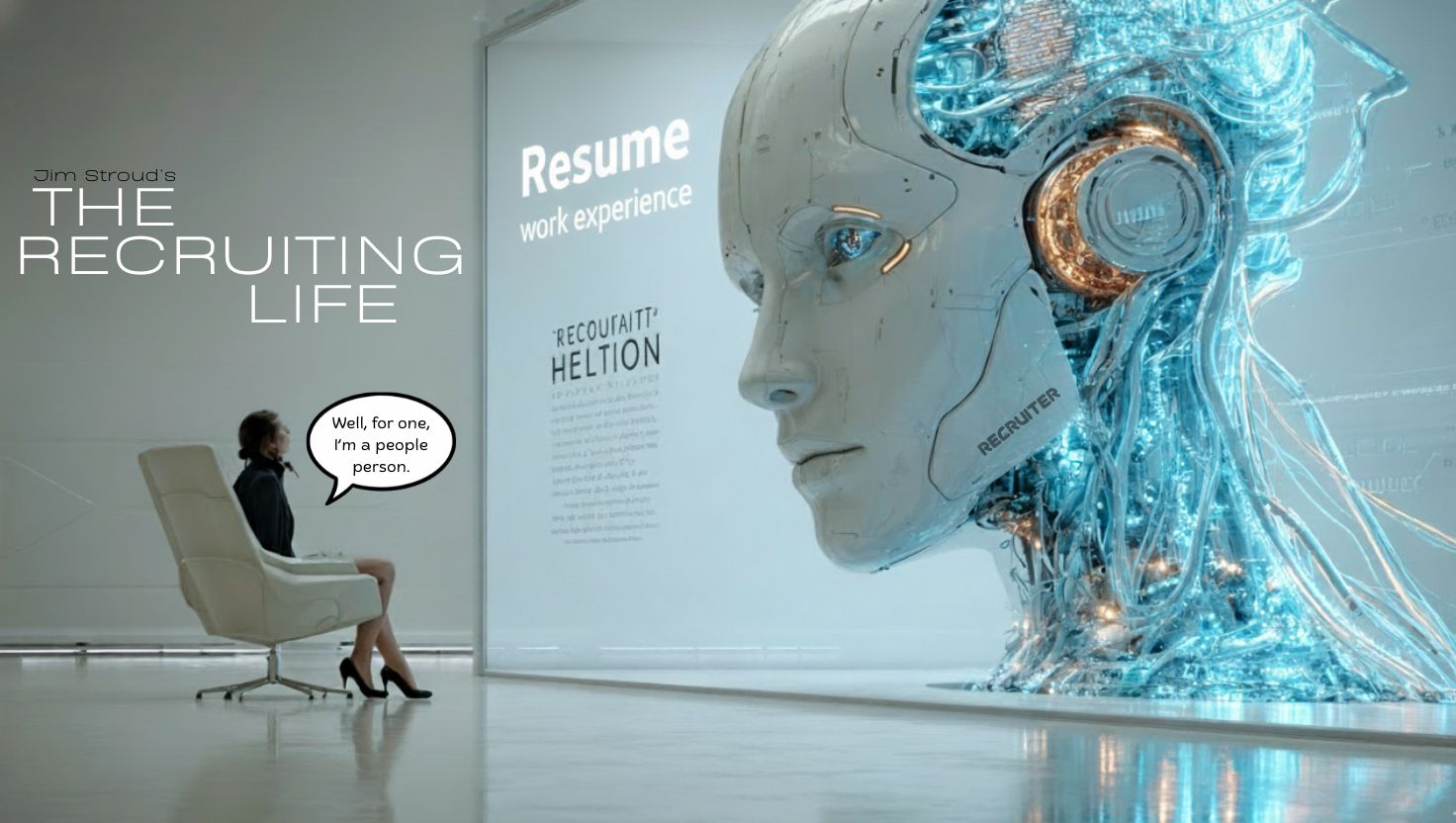
- AI Made Applying Easier and Hiring Harder
AI Made Applying Easier and Hiring Harder
More applications. Better resumes. Less certainty about who can do the job.

Jim Stroud
October 18, 2026

The Recruiting Life Newsletter
the skinny
AI made job applications faster, easier, and more polished. It also made it harder for employers to separate real ability from manufactured perfection.
Read. 👇
Sponsored by ProvenBase
AI made every resume look qualified. ProvenBase helps you find people who are.
Stop fighting through the same crowded applicant pool.
Find overlooked talent through verified skills, credentials, and evidence of actual work.
AI Made Applying Easier and Hiring Harder

I keep coming back to one number: 141.
According to the Institute of Student Employers’ 2026 Student Recruitment Report, employers received an average of 141 applications for every graduate position.
One hundred and forty-one people knocking on the same door.
You would think employers would be thrilled. More applicants should mean more choices. More choices should mean better hires.
That isn’t what happened.
The employers in the study received more than 1.7 million applications and made 31,577 hires. Yet 92% said they had suspected or confirmed misconduct somewhere in their selection process. Unauthorized AI use during interviews and online assessments was the most common concern.
A necessary clarification: That does not mean 92% of candidates cheated. It means almost every employer encountered enough questionable behavior to become concerned about the integrity of the process.
The report is based on UK employers, but the problem is not confined to the UK.
Greenhouse examined more than 640 million applications across over 6,000 companies. It found that applications per job more than doubled between 2022 and 2025. Applications per recruiter increased even faster while recruiting teams got smaller.
That explains something recruiters have been trying to tell the rest of the business.
The funnel is full.
The signal is not.
I’m not against candidates using AI. That would be hypocritical and unrealistic. AI can help someone organize their experience, improve their grammar, prepare for an interview or recognize transferable skills they overlooked.
Used that way, it can make hiring more accessible.
But there is a line between helping someone explain what they can do and helping them pretend they can do something they cannot.
That line is getting harder to see.
A candidate can paste a job description into an AI tool and receive a resume that echoes the employer’s language almost perfectly. A cover letter can be produced in seconds. An interview assistant can listen to questions and quietly suggest answers. Automated services can apply to hundreds of jobs while the candidate is doing something else.
The application looks stronger.
The person hasn’t changed.
That is the problem. Recruiters aren’t simply reviewing more candidates. They are reviewing more sophisticated presentations of candidates.
A polished resume once told you something about effort, communication and interest. It was never perfect evidence, but it contained clues. Now, polish may only prove that someone has access to the same tools as everyone else.
Even the cover letter is losing its meaning. The Washington Post recently examined whether AI has made it obsolete. If a candidate can create one instantly and an employer probably won’t read it, what is the document still measuring?
Maybe nothing.
Employers are responding. The ISE report found that 77% are reviewing or redesigning their selection processes. Some are adding time limits, personalized questions and randomized assessments. Others are closing applications earlier because the volume becomes unmanageable.
More employers are also telling candidates where AI use is acceptable. That is progress. Sixty-four percent now permit AI somewhere in the process, up from 46% the previous year.
Clear rules are better than pretending AI can be kept outside the building.
But I worry about the next part.
If candidates use more AI to apply, employers will use more automation to screen them. Candidates will then use better AI to get through those systems. Employers will add identity checks, behavioral monitoring and more assessments.
Around and around it goes.
The process gets longer. Trust gets thinner. Good candidates get tired and leave.
Meanwhile, a very qualified person who never applied is still sitting outside the employer’s field of view.
This is why I think proactive sourcing is about to become more valuable.
When every application is optimized against the same job description, recruiters need evidence that exists outside the application. Licensing records. Publications. Portfolios. Professional directories. Public code contributions. Project histories. Association activity. Actual proof that someone has done relevant work.
The resume can still start the conversation.
It should no longer be allowed to finish it.
Employers also need better interviews, but not necessarily more interviews. Ask consistent questions. Probe the thinking behind the answer. Use short, relevant work samples. Verify important claims early.
Most importantly, stop assuming the best candidate will join the pile.
Every competitor has access to that pile.
The real advantage is finding qualified people others never reached and evaluating them with evidence others never gathered.
That is where ProvenBase fits. It searches beyond conventional job boards and crowded professional networks, helping recruiting teams find talent across thousands of open-web sources where skills, credentials and professional contributions can be verified.
Because AI has made it easier for almost anyone to look qualified.
The next era of recruiting belongs to the teams that can determine who actually is.
One more thing before I go…
Tesla’s flying car is a job posting in disguise. Read the Career Intelligence Weekly to find out why.

…

Reply